
Tag: ai

  • Machining Tools Commonly Used in Hydraulic Maintenance

    Machining Tools Commonly Used in Hydraulic Maintenance

    Hydraulic systems are essential in many industrial sectors because they power heavy equipment and machinery used every day. Over time, components can wear down and require precision repairs to maintain efficiency and safety. Machining tools help restore damaged hydraulic parts, reduce downtime, and support longer equipment lifespans. Understanding these commonly used tools can help businesses maintain consistent hydraulic system performance.

    Boring Heads for Accurate Internal Repairs

    Boring heads are widely used in hydraulic maintenance because they help restore worn internal surfaces with precision. Hydraulic cylinders and valve housings often require accurate machining to maintain proper fluid pressure and sealing performance. These tools allow technicians to enlarge or correct damaged bores without replacing the entire component. Industrial sectors such as manufacturing, mining, and construction depend on properly machined hydraulic parts to keep equipment running efficiently.

    Precision boring also helps reduce vibration and uneven wear during operation. Some facilities use NC boring heads when machining tasks require consistent dimensional accuracy across multiple components. Maintaining accurate internal dimensions can help prevent unexpected hydraulic system failures and improve long-term reliability.

    Facing Heads for Smooth Sealing Surfaces

    Facing heads are commonly used to machine flat surfaces on hydraulic components that require proper sealing contact. Hydraulic systems depend on smooth surfaces to minimize leaks and maintain stable operating pressure. These tools are useful when repairing pump housings, cylinder ends, and mounting surfaces affected by wear or corrosion.

    Accurate facing also improves the fit between connected hydraulic components during reassembly. Industrial maintenance teams often perform facing operations to restore equipment without needing full replacements. Smooth sealing surfaces help reduce stress on gaskets and seals during daily operation. Reliable surface finishing supports consistent hydraulic system performance in demanding work environments.

    Reamers for Precision Hole Finishing

    Reamers are important finishing tools used to improve hole accuracy after drilling or boring operations. Hydraulic maintenance tasks often require precise hole sizing for shafts, pins, and fluid-related fittings. A properly reamed hole provides better alignment between connected components.

    Improved alignment helps reduce friction and unnecessary wear inside hydraulic assemblies. Technicians may use machine reamers or hand reamers depending on the size and condition of the part being repaired. Consistent hole dimensions also help maintain pressure stability throughout hydraulic systems. Precision finishing processes contribute to safer and more dependable industrial equipment operation.

    Milling Machines for Hydraulic Component Restoration

    Milling machines are versatile tools used to repair and reshape hydraulic components with high precision. These machines can cut slots, flatten surfaces, and remove damaged material from industrial parts. Hydraulic repair shops frequently use milling equipment on brackets, housings, and pump assemblies. Accurate milling helps restore component dimensions and improves assembly fit during maintenance work.

    Many industrial operations rely on milling services to reduce downtime caused by worn hydraulic equipment. Proper machining also supports better fluid flow and system efficiency after repairs are completed. Consistent restoration work helps extend the operational lifespan of hydraulic machinery.

    Lathes for Turning Cylindrical Parts

    Lathes are essential machining tools because many hydraulic components have cylindrical shapes and surfaces. Hydraulic rods, shafts, bushings, and sleeves often require turning operations to restore proper dimensions. A lathe rotates the workpiece while cutting tools remove worn or damaged material with accuracy. Refinishing hydraulic cylinder rods can improve sealing performance and reduce fluid leakage.

    Industrial maintenance facilities commonly use lathes to restore parts instead of replacing expensive equipment components. Accurate turning also helps reduce vibration and uneven movement during machine operation. Reliable lathe work supports smoother hydraulic performance across different industrial sectors.

    Drill Presses for Controlled Hole Creation

    Drill presses are commonly used in hydraulic maintenance to create accurate and stable holes in metal components. Controlled drilling is important for mounting hardware, fluid passageways, and threaded connections. These machines help technicians maintain proper hole positioning and depth during repairs. Better drilling accuracy supports later machining operations such as tapping and reaming.

    Hydraulic systems depend on correctly aligned holes to maintain structural stability and fluid control. Industrial repair teams often use drill presses when restoring damaged machine frames and hydraulic assemblies. Proper drilling procedures can help improve the durability and safety of hydraulic equipment.

    Honing Machines for Cylinder Surface Finishing

    Honing machines are widely used to improve the internal finish of hydraulic cylinders during maintenance work. Smooth cylinder walls allow seals to move properly while reducing friction and fluid leakage. Honing also removes small imperfections that may affect hydraulic pressure performance. The process creates a fine surface pattern that supports lubrication and extends component lifespan.

    Technicians often perform honing after boring operations to achieve final dimensional accuracy. Proper cylinder finishing helps hydraulic systems operate more efficiently under heavy workloads. Consistent maintenance practices are important for preventing breakdowns in industrial hydraulic equipment.

    Grinding Machines for Surface Restoration

    Grinding machines are used to restore worn hydraulic parts that require tight tolerances and smooth finishes. These machines can accurately remove small amounts of material from hardened metal surfaces. Hydraulic shafts, valves, and bearing surfaces are commonly repaired through precision grinding processes. Better surface quality helps reduce friction between moving components during operation.

    Grinding can also correct damage caused by contamination, heat, or long-term wear. Industrial facilities rely on accurate grinding work to maintain equipment reliability and operational safety. Precision restoration techniques help support consistent hydraulic system performance over time.

    Tapping Machines for Reliable Threading

    Tapping machines are designed to create internal threads for hydraulic fittings and fastening systems. Strong and accurate threads are important for maintaining secure hydraulic connections under pressure. These machines help produce cleaner and more consistent threads compared to manual methods. Hydraulic maintenance often involves restoring damaged threaded holes in pumps, cylinders, and valve bodies.

    Reliable threading helps reduce the risk of leaks and loose connections during operation. Industrial repair technicians depend on precise threading to support safe equipment assembly and maintenance procedures. Properly threaded components also contribute to longer-lasting hydraulic system performance.

    Portable Line Boring Equipment for Onsite Repairs

    Portable line boring equipment allows technicians to perform machining work directly at industrial job sites. Large hydraulic machinery can be difficult and expensive to transport to offsite repair facilities. Portable equipment helps restore worn bores while reducing downtime for critical operations. Industries such as mining, marine, and heavy construction often rely on onsite machining solutions to maintain productivity.

    Many companies like Ferguson Industrial Company are associated with onsite hydraulic repair and maintenance practices focused on industrial sectors to prevent breakdowns, extend equipment lifespan, and ensure consistent performance. Field machining services also help businesses avoid delays caused by equipment removal and replacement. Efficient onsite repair solutions continue to play an important role in modern hydraulic maintenance operations.

    Conclusion

    Machining tools play an essential role in keeping hydraulic systems reliable, efficient, and safe across many industrial sectors. From boring and honing to grinding and portable line boring, each tool supports accurate repairs and long-term equipment performance. Regular hydraulic maintenance combined with precision machining can help reduce downtime, prevent costly breakdowns, and extend the lifespan of critical machinery. Understanding how these tools are used allows businesses to make informed maintenance decisions that support smoother daily operations.
  • Inside Modern Industrial Operations: List of Smarter Approaches to Efficiency

    Inside Modern Industrial Operations: List of Smarter Approaches to Efficiency

    Modern industrial operations are evolving toward systems that prioritize clarity, adaptability, and long-term performance. Rather than relying on isolated upgrades, many facilities focus on aligning materials, processes, and data into a cohesive workflow. This approach helps teams reduce waste, control costs, and respond faster to changing production demands. Below are several practical ways efficiency is being improved across today’s industrial environments.

    Streamlined Material Selection for Long-Term Performance

    Modern industrial operations begin with smarter material selection that balances strength, weight, and cost. Engineers evaluate performance requirements early to avoid overengineering and reduce waste downstream. For engine components exposed to high stress and heat, materials must deliver consistency over long operating cycles.

    In some designs, tungsten heavy alloy is specified because its density and stability support precise motion and durability without frequent replacement. The key is not the material itself, but how clearly its properties match the real operating environment. When selection decisions are documented and shared, procurement and production teams move faster with fewer revisions. This alignment at the start sets the tone for efficiency across the entire operation.

    Precision Manufacturing Through Advanced Cutting Methods

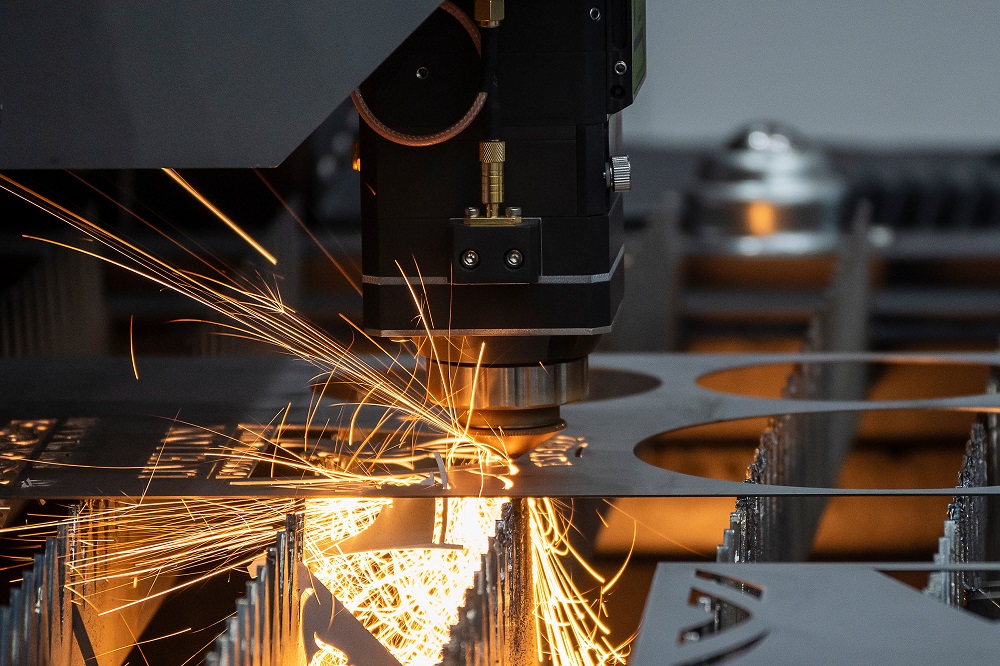
    Precision manufacturing plays a central role in reducing rework and maintaining tight tolerances. Fiber laser cutting, in particular, enables complex geometries to be produced with minimal material loss and high repeatability. Advanced fiber laser solutions from providers such as Westwood Metal Technologies support precision metalworking by delivering consistent beam control and stable cutting performance. This level of control improves edge quality, reducing the need for secondary finishing operations.

    When evaluating fiber laser capabilities in mixed-production environments, facilities often focus on how well the technology supports process stability rather than marketing claims. Properly tuned cutting parameters also extend equipment life and reduce unplanned downtime, helping manufacturers sustain throughput without compromising accuracy.

    Integrated Workflows and Data-Driven Decisions

    Efficiency improves further when individual processes are connected into a single, visible workflow. Digital tracking of jobs, materials, and machine status reduces guesswork on the production floor. Operators can respond faster when data highlights bottlenecks or recurring delays. Clear communication between design, machining, and quality teams prevents small issues from compounding. Standard operating procedures support consistency while still allowing room for skilled judgment.

    Over time, collected performance data guides incremental improvements rather than disruptive overhauls. This integrated approach helps modern industrial operations stay adaptable in changing demand conditions.

    Smarter Layout Planning to Reduce Motion Waste

    Efficient industrial operations often start with how a workspace is physically arranged and maintained. Poor layouts can increase unnecessary movement, slowing production and tiring workers over long shifts. Thoughtful equipment placement reduces handling time, limits repeated motion, and improves overall process flow. Clear, well-marked pathways also enhance safety, improve visibility, and minimize congestion during busy production periods.

    When materials move logically from one stage to the next, errors decrease naturally and productivity improves steadily. Layout reviews are most effective when operators are actively involved in the planning and evaluation process. Small adjustments in spacing, positioning, or access points can lead to noticeable efficiency gains across daily operations.

    Energy Management for Sustainable Operations

    Energy usage has become a key factor in long-term operational efficiency and sustainability. Monitoring consumption helps facilities identify machines that draw excessive power or operate inefficiently during production cycles. Simple changes, such as optimized run times, shutdown schedules, or load balancing, can lower energy waste without affecting output. Efficient systems also reduce heat buildup, improving comfort, airflow, and working conditions on the floor.

    Predictable energy use supports better budgeting, forecasting, and long-term planning efforts. Teams that understand energy data can make smarter scheduling, maintenance, and upgrade decisions. Over time, controlled energy management supports both cost savings and environmental responsibility.

    Quality Control Built Into Daily Operations

    Quality control is most effective when it is part of everyday work rather than a final checkpoint at the end of production. Early inspections help detect issues before they affect large production runs or customer deliveries. Operators who monitor quality in real time can make immediate adjustments to prevent defects from spreading. This approach reduces scrap, minimizes the need for rework, and avoids unnecessary downtime.

    Consistent quality checks also build confidence across teams, supervisors, and departments. Clear acceptance criteria prevent confusion, miscommunication, and subjective decision-making. When quality is embedded in daily operations, efficiency improves naturally and consistently.

    Clear Documentation and Standardized Processes

    Standardized documentation helps ensure tasks are completed correctly, safely, and consistently every time. Clear, accessible instructions reduce variation between shifts, teams, and individual operators. This consistency improves quality while shortening training time for new employees and temporary staff.

    Well-documented processes also make troubleshooting faster, more accurate, and more effective. Teams spend less time asking repetitive questions and more time producing reliable results. Regularly updated documentation supports continuous improvement efforts across departments and locations. When everyone follows the same standards, efficiency becomes easier to maintain, measure, and scale.

    Conclusion

    Modern industrial operations achieve efficiency not through single upgrades, but through coordinated, well-informed decisions across materials, processes, people, and data. From thoughtful material selection and precision manufacturing to integrated workflows and smarter layout planning, each improvement compounds the next.

    Energy management, built-in quality control, and clear documentation further strengthen day-to-day performance while supporting long-term sustainability. When these approaches work together, facilities become more adaptable, predictable, and resilient. Ultimately, efficiency grows when operations are designed to reduce friction, support informed decisions, and continuously improve with real-world feedback.

  • Why is the Governance Risk and Compliance (GRC) Platform Market Accelerating in 2025?

    Why is the Governance Risk and Compliance (GRC) Platform Market Accelerating in 2025?

    Imagine a world where regulatory pressures, sustainability demands, and operational risks no longer feel like silos pulling your business in different directions. 

    As per the market research analysis by Next Move Strategy Consulting, the global Governance Risk and Compliance (GRC) Platform Market is expected to reach USD 45.30 billion by 2025 and grow to USD 78.89 billion by 2030, at a CAGR of 11.73%. The sector is at a pivotal moment in 2025. Organizations are seeking unified solutions that blend compliance, risk assessment, and governance into intelligent, scalable systems. 

    What Recent Partnership Signals a Shift Toward Integrated Sustainability in GRC?

    On December 11, 2025, SustainGRC, a UK-headquartered provider of AI-native software for sustainability and GRC, announced a strategic partnership with DCarbon, one of the Middle East’s largest sustainability consulting firms. This collaboration spans the Europe, Middle East, and Africa (EMEA) region, where DCarbon will integrate SustainGRC’s platform with its advisory expertise to offer clients a comprehensive sustainable business intelligence solution.

    • Core Focus Areas: The partnership targets unified governance, risk, and sustainability performance. It addresses traditionally separate domains by providing data on sustainability risks, operational and financial risks, compliance requirements, supply chain human rights (including Scope 3 emissions), and audit trails for financial reporting.
    • Strategic Elements: DCarbon gains an equity position in SustainGRC, signaling long-term commitment. This move enables clients to automate compliance processes and derive actionable insights, moving beyond fragmented tools.

    In analytical terms, this alliance exemplifies how GRC platforms are evolving to incorporate environmental, social, and governance (ESG) factors. SustainGRC’s platform leverages artificial intelligence to integrate these elements, allowing enterprises to meet escalating global disclosure expectations—such as those from the European Sustainability Reporting Directive—without compromising on risk oversight.

    How Does IBM’s Gartner Recognition Reinforce GRC Platform Innovation?

    What happens when decades of expertise meet cutting-edge artificial intelligence? IBM OpenPages earned a Leader position in the 2025 Gartner Magic Quadrant for Governance, Risk and Compliance Tools, as well as in the Critical Capabilities report. Evaluated on Ability to Execute and Completeness of Vision, this recognition highlights IBM’s role in transforming GRC from reactive compliance to proactive strategy.

    • Key Strengths: IBM brings global scalability via hybrid-cloud deployments, deep industry knowledge in sectors like financial services, healthcare, and energy, and AI-driven automation. Since acquiring OpenPages in 2010, IBM has integrated generative AI and large language models in 2023 to automate control mapping, evidence collection, and policy documentation.
    • Recent Advancements: The platform now features agentic AI for compliance recommendations and integration with IBM watsonx.governance for responsible AI oversight. These tools address executive priorities, where more than 75% seek generative AI adoption for risk management.

    Consider client outcomes: CNP Vita Assicura achieved a 70% reduction in data entry, improved reporting accuracy, and enhanced visibility. Similarly, Navigator Gas cut audit fees by more than 50% through customized implementations. As Sripriya Srinivasan, General Manager of Core Software Products at IBM, noted, “For more than a decade, we have been reimagining how governance, risk and compliance can work—embedding AI and automation into OpenPages to make risk management faster, more intelligent, and more connected across the enterprise.”

    IBM’s leadership validates AI as a cornerstone of mature GRC platforms, enabling predictive risk identification and dynamic control optimization. This endorsement boosts market confidence in vendors prioritizing trust and transparency—64% of CEOs view these as brand differentiators, while 81% see security and assurance as competitive edges.

    • Deployment Flexibility: Expanded software-as-a-service (SaaS) options lower barriers for small and medium enterprises, reducing costs by up to 40% in onboarding.
    • Proactive Shift: Organizations using such platforms report 25–35% faster response to emerging risks, per integrated case studies.
    AspectSustainGRC-DCarbon PartnershipIBM OpenPages Gartner Leadership
    Geographic FocusEMEA regionGlobal, with emphasis on regulated industries
    Key InnovationAI-native sustainability integrationGenerative AI for automation and oversight
    Client BenefitsUnified ESG-risk data; equity-driven advisory50–70% efficiency gains in audits and reporting
    Market SignalDemand for non-fragmented solutionsProactive, predictive GRC maturity

    In What Ways Are These Developments Reshaping the GRC Platform Market?

    At Next Move Strategy Consulting, we analyze how timely announcements like these influence broader market dynamics. The SustainGRC-DCarbon partnership, announced just yesterday on December 11, 2025, highlights a surge in demand for GRC platforms that embed sustainability—driven by regulatory harmonization across EMEA. This convergence addresses a critical gap: enterprises often juggle disparate tools for ESG reporting and risk compliance, leading to inefficiencies estimated at 20–30% in resource allocation.

    Meanwhile, IBM’s 2025 Gartner positioning reinforces investor and buyer trust in AI-enhanced platforms, accelerating adoption rates by validating scalability for diverse enterprise sizes. Together, these events signal a market projected to prioritize integrated, resilient solutions amid rising geopolitical and climate risks. For instance, the equity stake in SustainGRC could spur faster regional customizations, while IBM’s SaaS expansions democratize access, potentially increasing market penetration by 15–20% among SMEs.

    From our vantage, this duo exemplifies a maturing ecosystem where GRC evolves into a strategic enabler. It empowers organizations to not only comply but thrive—fostering competitiveness through trusted value creation and predictive insights.

    What Challenges Lie Ahead for GRC Platform Adoption?

    Even with these positives, questions arise: How do organizations navigate integration complexities? The partnership’s emphasis on unified intelligence tackles this by automating data flows, yet it requires upfront investment in change management. IBM’s AI tools mitigate this through agentic recommendations, but ensuring ethical AI use remains paramount—hence the watsonx.governance tie-in.

    In essence, while opportunities abound, success hinges on vendor-client alignment to avoid over-reliance on unproven features.

    Next Steps: How Can Your Organization Capitalize on GRC Trends?

    As we close, consider these actionable insights tailored for forward-thinking leaders:

    1. Assess Integration Needs: Evaluate your current GRC stack against unified sustainability models—start with a pilot using AI-native tools to measure ROI within 90 days.
    2. Leverage Vendor Recognitions: Reference Gartner reports to shortlist leaders like IBM OpenPages, focusing on sectors with high regulatory overlap.
    3. Explore Regional Partnerships: For EMEA operations, engage consultancies like DCarbon to blend advisory with platform access, targeting Scope 3 risk reductions.
    4. Build AI Governance: Implement responsible AI frameworks early to harness generative tools without compliance pitfalls.

    By acting on these, your enterprise can transform GRC from a cost center into a value driver. What is your next move in this evolving landscape?

    About the Author

    Sneha Chakraborty is a passionate SEO Executive and Content Writer with over 4 years of experience in digital marketing and content strategy. She excels in creating optimized, engaging content that enhances online visibility and audience engagement. Skilled in keyword research, analytics, and SEO tools, Sneha blends creativity with data-driven insights to deliver impactful results. Beyond her professional work, she enjoys reading, sketching, and nature photography, drawing inspiration from creativity and storytelling. The author could be reached out at info@nextmsc.com.

  • What Are the Latest Trends in ATM Security Technology?

    As digital threats become more sophisticated, ATM security technology continues to evolve rapidly to protect consumers and financial institutions alike. Modern advancements are not only enhancing user experience but also making it significantly harder for cybercriminals to exploit vulnerabilities. Here’s a look at the latest trends in ATM security technology that are shaping the future of banking.

    1. Biometric Authentication

    One of the most significant developments in ATM security is the use of biometric technology. ATMs are increasingly integrating fingerprint, iris, or facial recognition systems to verify a user’s identity. Unlike traditional PINs or cards, biometric identifiers are nearly impossible to replicate, making them a highly secure option.

    Banks are now pairing biometric data with existing authentication systems, creating a multi-layered approach that greatly reduces the chance of unauthorized access.

    2. AI-Powered Threat Detection

    Artificial intelligence (AI) and machine learning are being used to analyze transaction patterns and detect anomalies in real time. These systems can flag suspicious activities such as card cloning or unusual withdrawal behavior before they result in financial losses.

    With AI-driven software, financial institutions can respond proactively to threats, shutting down compromised ATMs or alerting customers instantly to suspicious activity.

    3. Anti-Skimming Devices

    Skimming continues to be a widespread issue where criminals place illegal card readers over legitimate ones. The latest ATMs are equipped with advanced anti-skimming technologies that use sensors to detect tampering or unauthorized devices.

    Some newer machines even have jamming signals or rotating card readers to prevent any external device from copying card data.

    4. End-to-End Encryption

    To protect sensitive user data, modern ATMs now feature end-to-end encryption (E2EE). This ensures that data remains encrypted from the moment it’s entered at the ATM to when it reaches the bank’s servers, making it much more difficult for hackers to intercept.

    This trend not only safeguards data but also aligns with growing regulatory requirements around consumer privacy and data protection.

    5. Cloud-Based ATM Management

    With the shift toward digital transformation, many banks are adopting cloud-based ATM management systems. These systems allow for real-time software updates, remote diagnostics, and faster threat response times.

    By minimizing on-site interventions, financial institutions can ensure faster maintenance and higher uptime, all while improving security oversight.

    Stay Ahead of ATM Security Threats

    ATM security technology is advancing quickly to keep up with increasingly sophisticated threats. Whether you manage a financial institution or operate ATM locations, it’s crucial to stay informed and proactive.

    Looking to upgrade your ATM systems with the latest in security technology?
    Contact Atlantic Processing today to learn how we can help you stay protected, compliant, and ahead of the curve.

    This post was written by a professional at Atlantic Processing. https://atlanticprocessing.net headquartered in the Tampa Bay area, is a leading national ATM processing and service provider. We specialize in comprehensive ATM placements, processing, sales, and service, catering to retail and financial institutions across the United States. Our commitment to excellence and customer satisfaction ensures that our clients receive top-tier service and support. Whether you need a new ATM installation, efficient processing solutions, or reliable maintenance, Atlantic Processing is your trusted partner in keeping your ATM operations running smoothly and efficiently. Contact us today and get started with your very own ATMs.

Design a site like this with WordPress.com
Get started